Overview
Highway 7 in Vanscoy, Saskatchewan, is a busy corridor for the transportation of goods to national and international markets. This highway serves as a key trade route for the Province of Saskatchewan, connecting the communities of Kindersley, Rosetown, and Delisle with Saskatoon and ports on the west coast. The Saskatchewan Ministry of Highways & Infrastructure contracted WSP Canada Inc. to design the third and final phase of the highway twinning project, bypassing the Town of Vanscoy.
Challenge
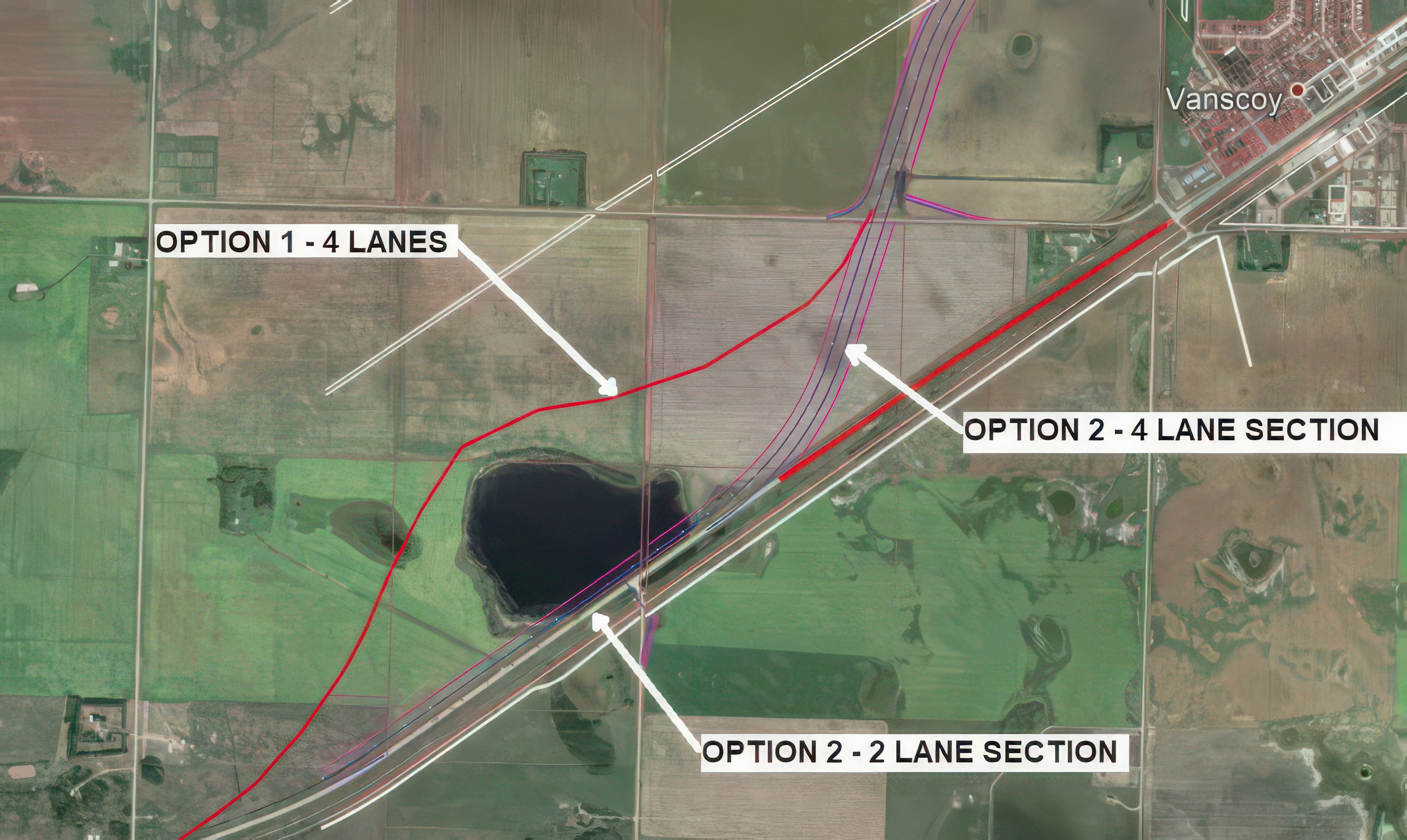
As part of the preliminary engineering, WSP investigated two alignment options:
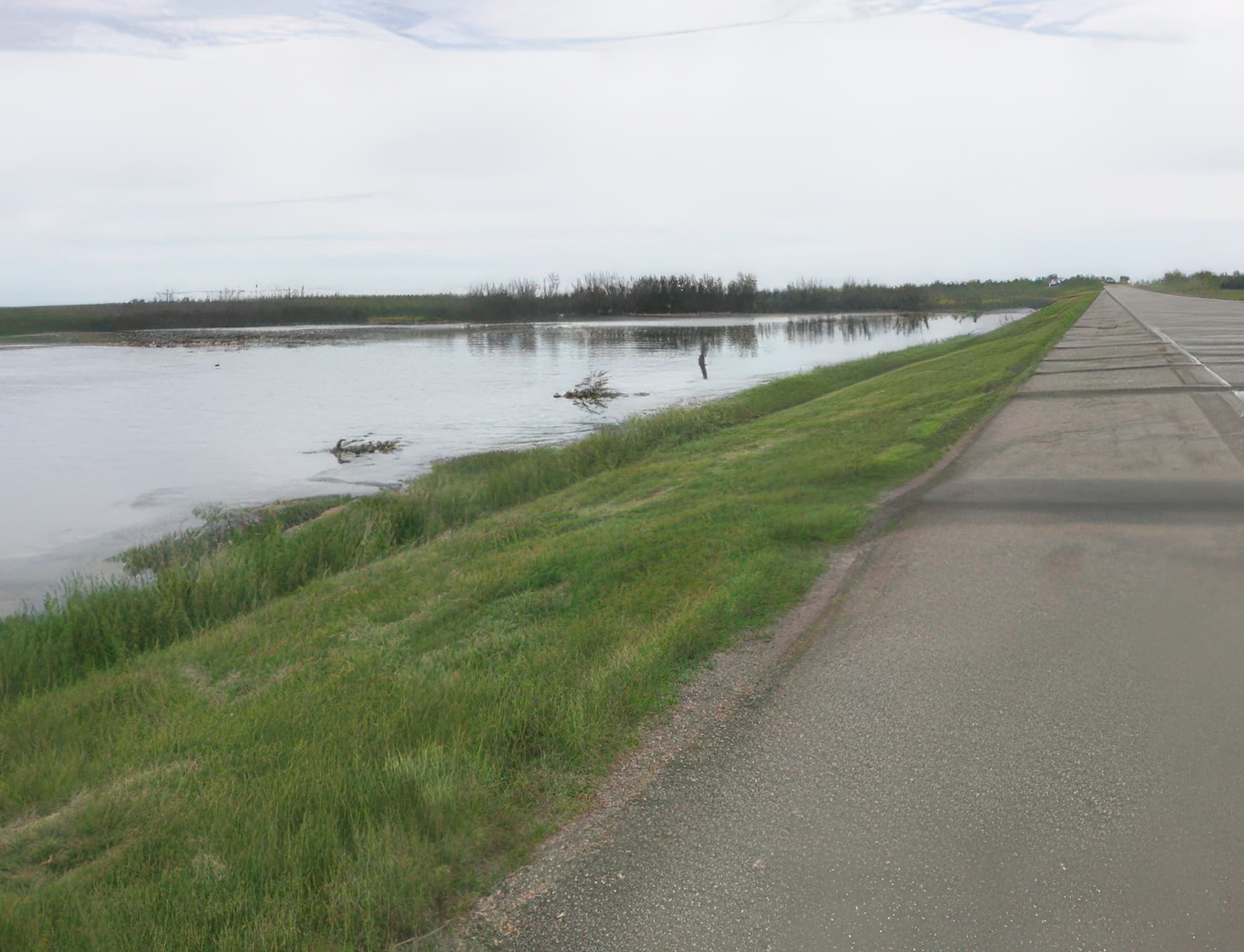
Option 2 would require six fewer lane kilometers of road construction. However, the challenge with this solution was that 74.89 yd (800 m) of a two-lane highway would need to be constructed through the large slough, presenting significant construction and permitting challenges. Additional concerns included embankment constructability on a highly organic subgrade, construction in 10 ft (3 m) of deep water, and the need to mitigate impacts on surrounding aquatic habitats.
Solution
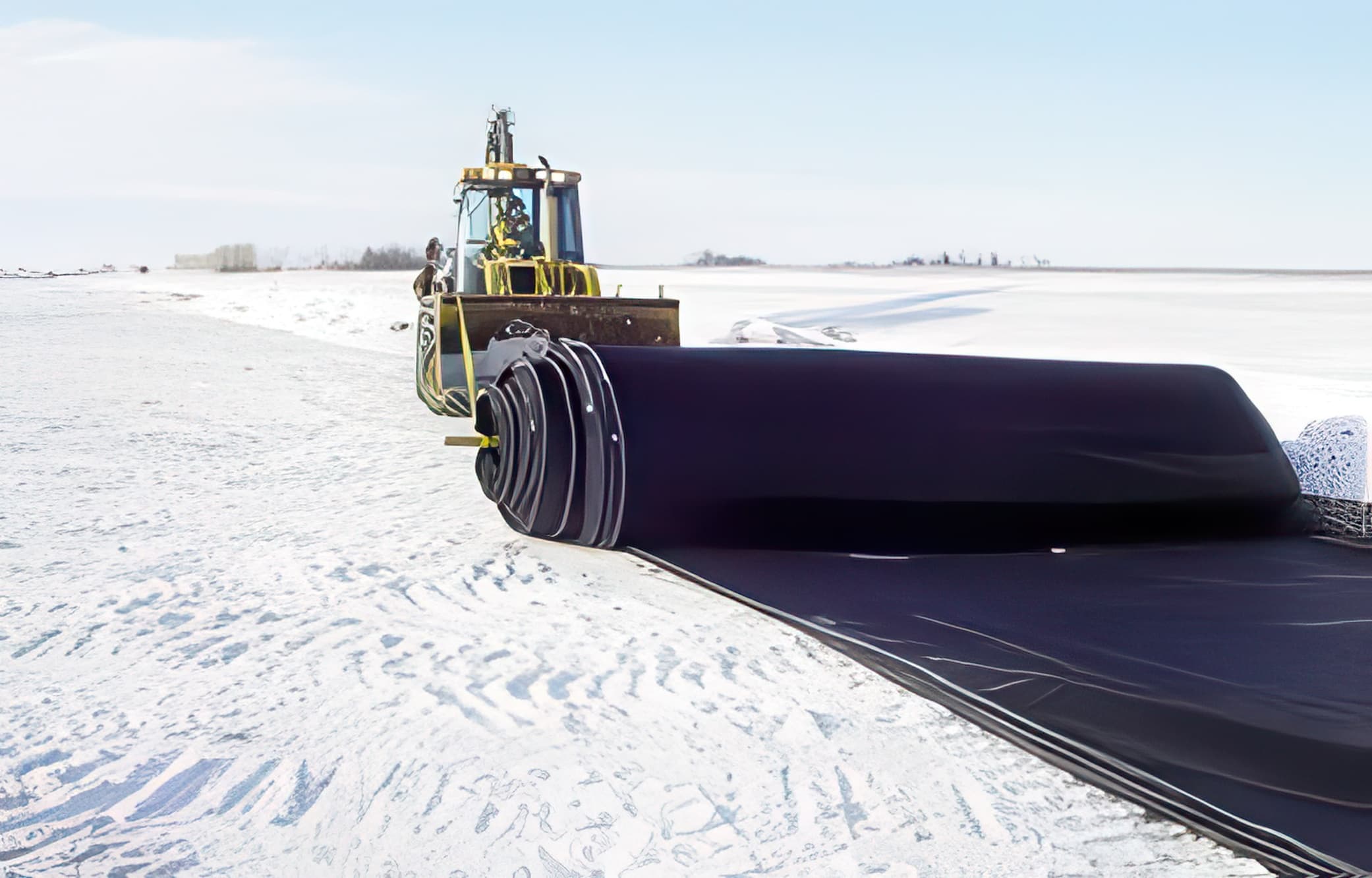
The design engineer for WSP had previously worked on a similar project along Highway 11 near Neuanlage, Saskatchewan, and understood that using innovative geosynthetics and taking advantage of winter weather could lead to significant time and cost savings. The embankment construction was shifted from the traditional summer and fall timeline to a winter program, which provided several advantages:
1. Increased bid participation from contractors
– Winter is traditionally a slow work period, benefiting both parties. It creates a competitive bid environment for the owner while providing contractors with a revenue stream during a low-revenue season.
2. Embankment construction on the ice surface
– This approach avoided in-water disturbance and siltation from construction activities. It also eliminated access challenges associated with marine construction over highly organic, saturated subgrade soils.
3. Increased embankment strength
– Constructing the embankment above the slough bottom during winter provided a more stable foundation than if the work had been carried out in a submerged marine environment.
The primary challenge with this type of construction is ensuring that the grade built on the ice settles uniformly. To achieve this, a high-modulus woven geosynthetic was incorporated. A similar approach had been successfully implemented on the Neuanlage project, where a high-strength woven geotextile was placed at the base of the embankment. This technique facilitated uniform settlement during the spring thaw, preventing noticeable secondary or differential settlement in subsequent years.
For the Vanscoy highway embankment, a structure approximately 13 ft (4 m) high was designed to meet the required grade while accounting for settlement in the organic soil and the slough’s depth. Solmax recommended installing the high-tenacity and high-survivability MIRAFI® HP770PET woven geosynthetic, which could withstand potentially high stresses and resist differential settlement. MIRAFI HP770PET is a combination of polypropylene and polyester yarns woven into a highly stable matrix, making it well-suited for basal reinforcement applications.
Since MIRAFI HP770PET is a biaxial geosynthetic, its rolls could be seamed together, eliminating concerns about deployment direction or seam strength. Seaming the MIRAFI HP770PET also reduced material wastage and prevented the separation of adjacent panels, which could otherwise cause non-uniform support of the overlying embankment and structural distress. Standard rolls were factory-seamed into 105 ft by 300 ft (32 m by 91.4 m) long panels, minimizing field seaming requirements. The total finished panel area measured 190 ft by 2,644 ft (58 m by 806 m) after all seams were completed in the field.
Construction Challenges and Outcome
An unanticipated construction challenge was that the thicker embankment structure provided greater insulation than expected for the underlying ice. By early May, the ice had not thawed. To address this, the contractor opened sections of the embankment, reducing the insulating layer’s thickness and accelerating ice melt. This adjustment allowed the contractor to stay ahead of schedule while mitigating potential settlement issues post-construction.
A high-level cost comparison was conducted during the preliminary engineering stage, based on 8.7 miles (14 km) of highway being required for Option 1 and 5 miles (8 km) for Option 2. Option 2 resulted in a cost savings of $5.6 million, primarily due to the shorter route.